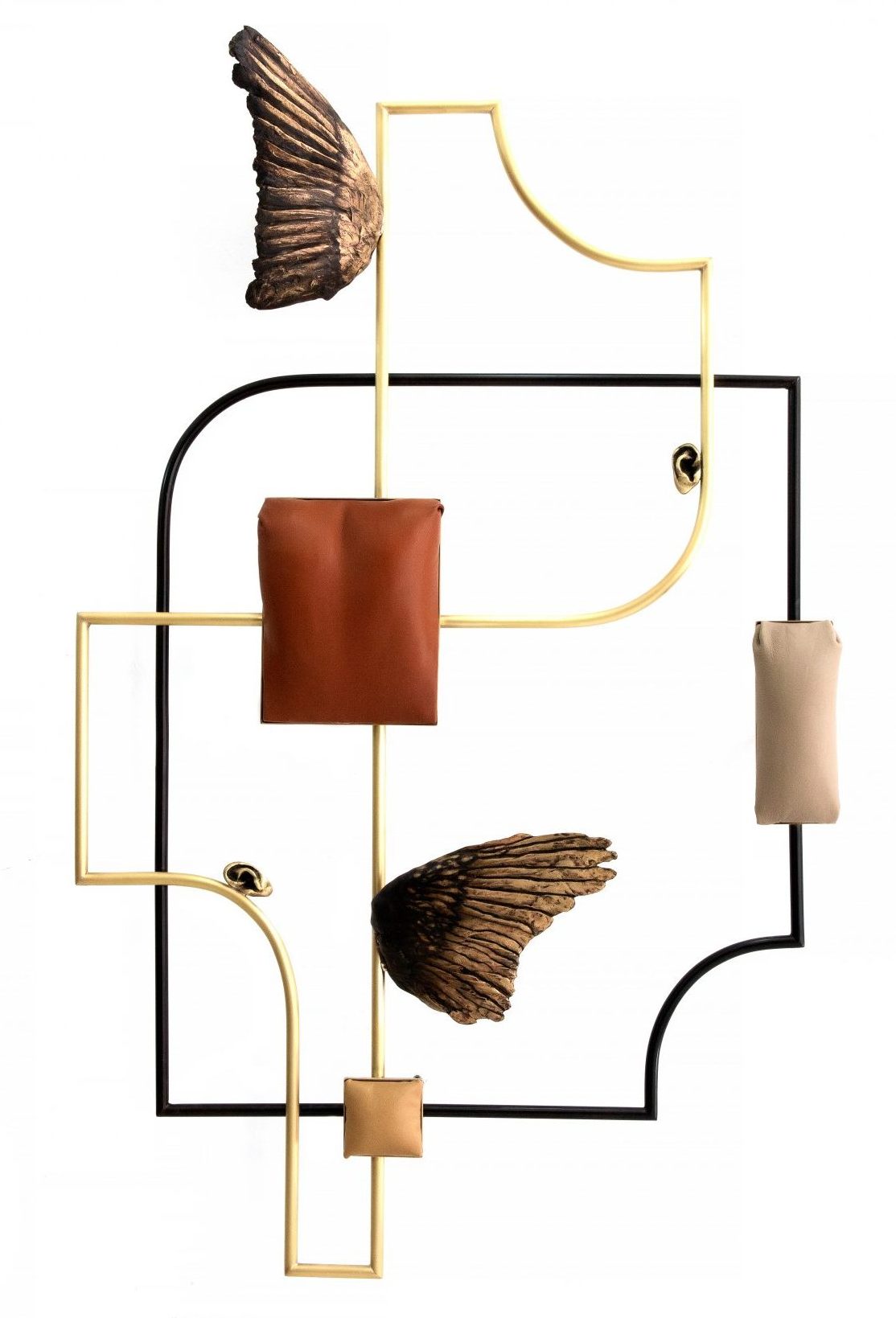
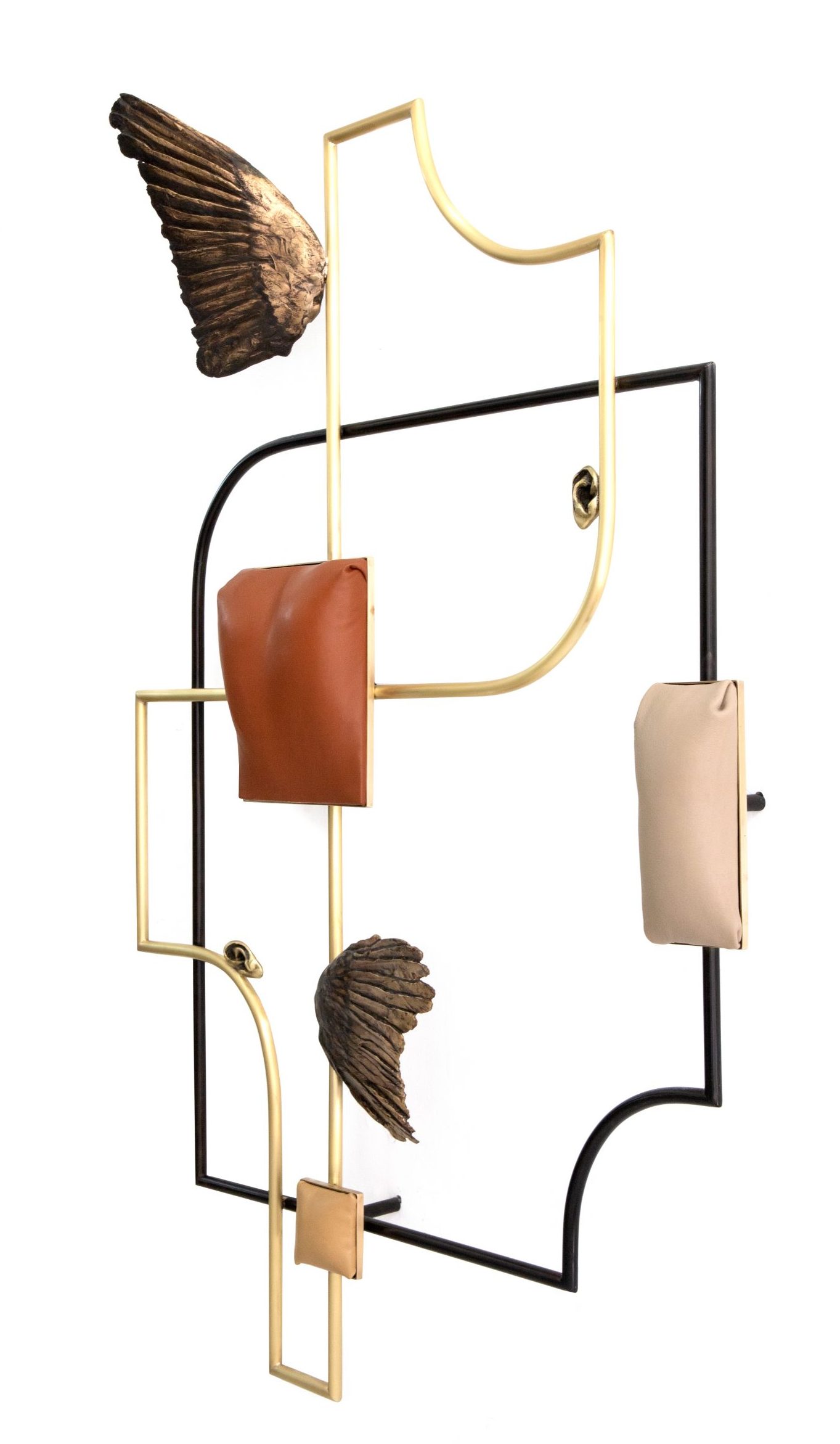
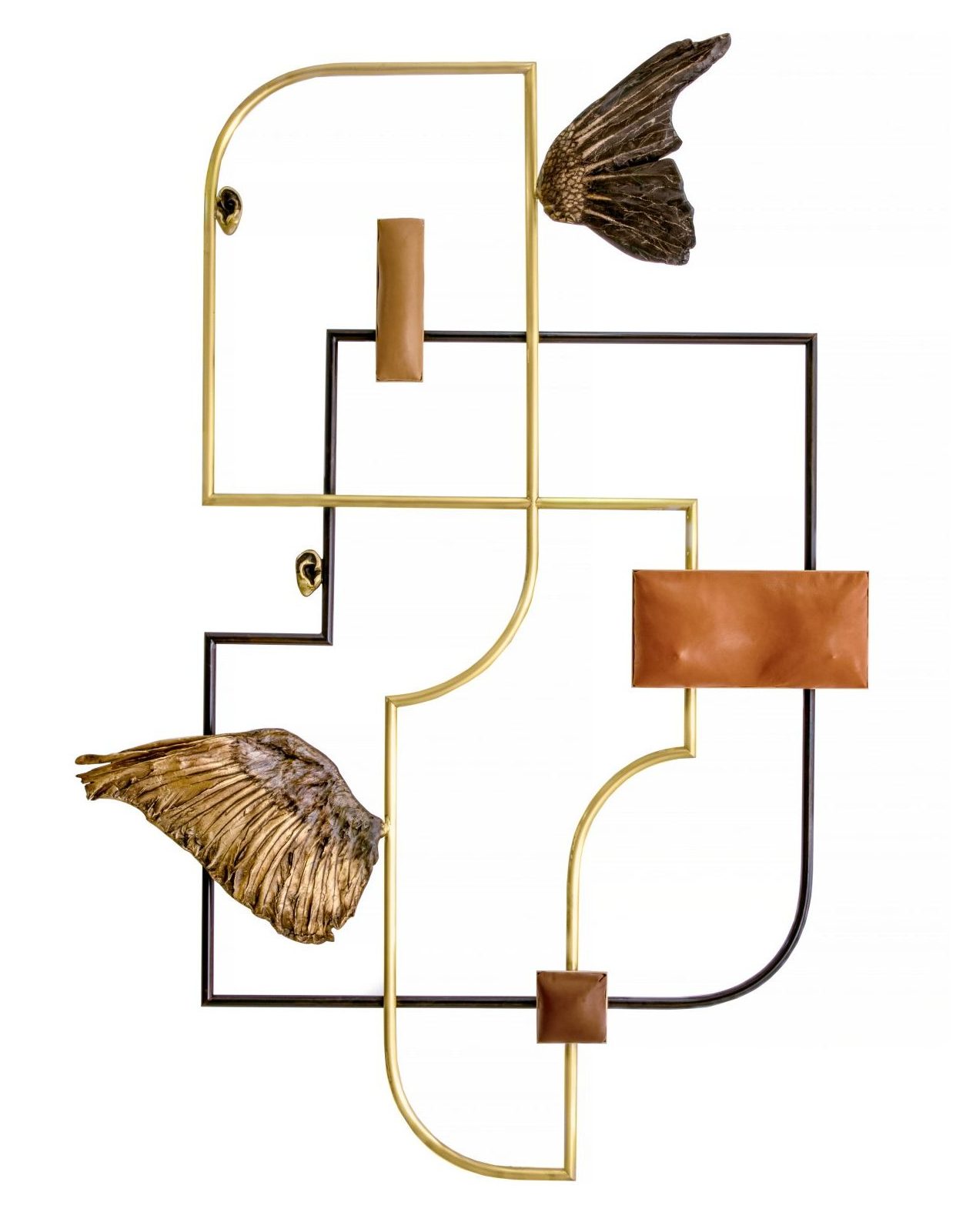
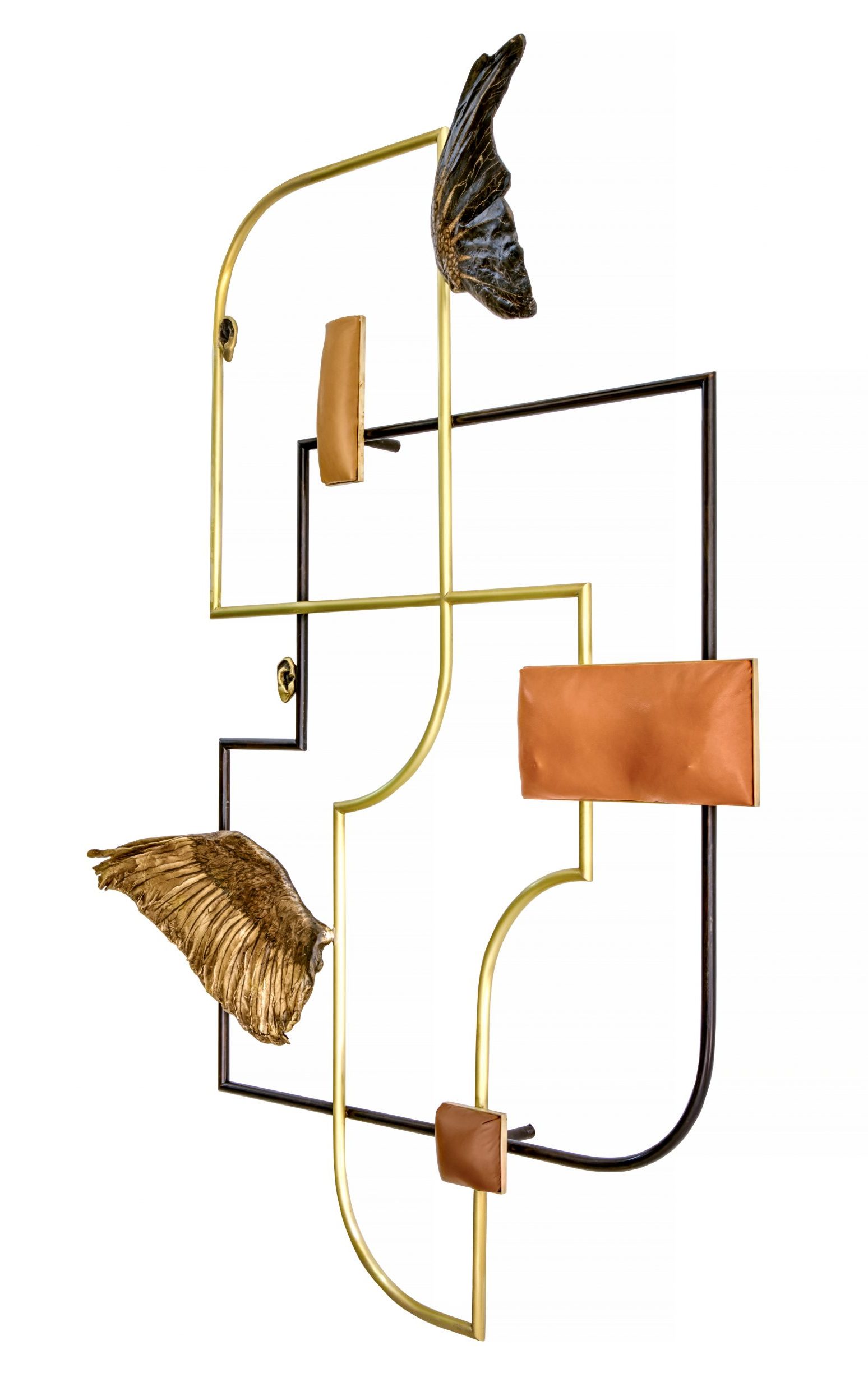
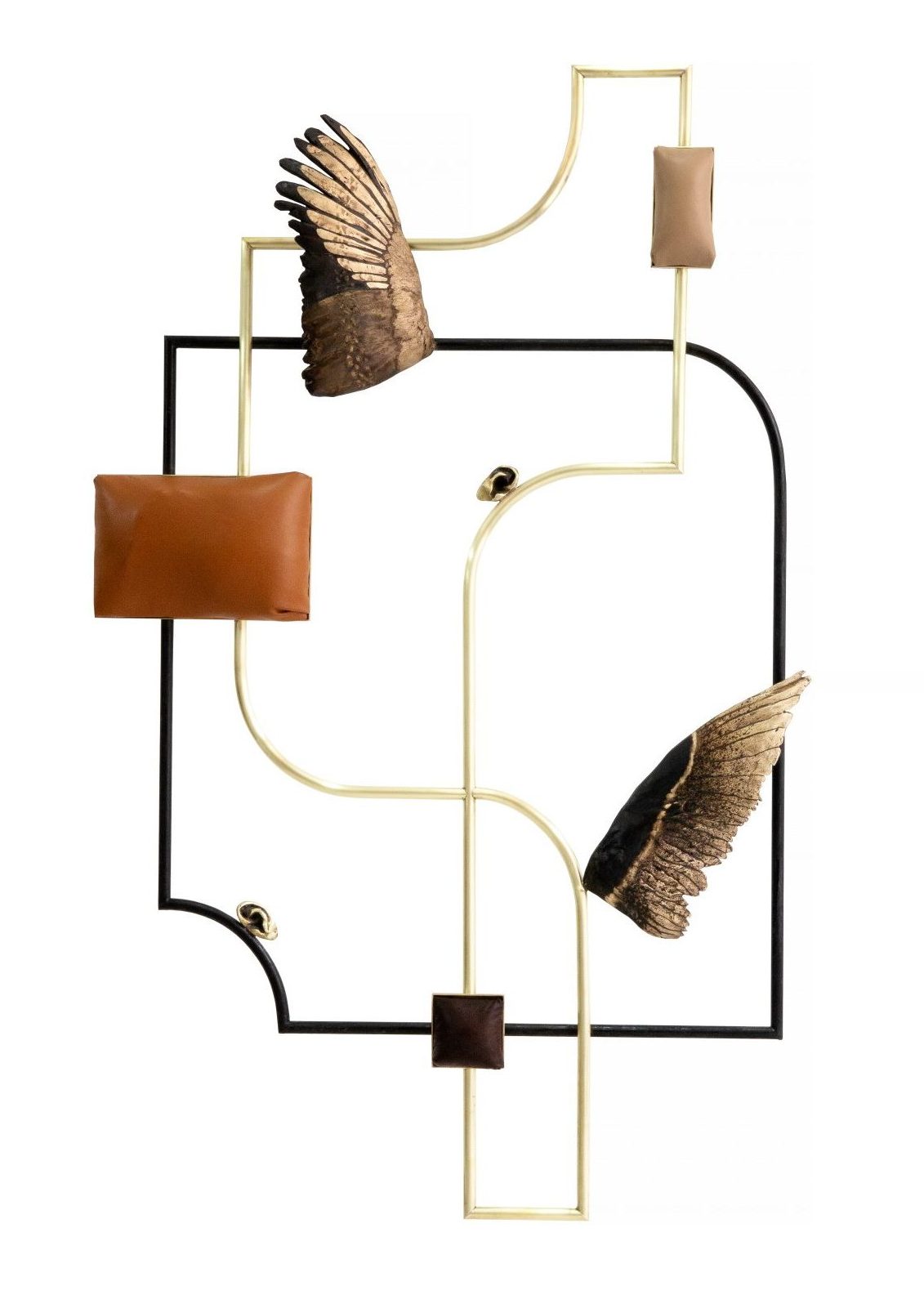
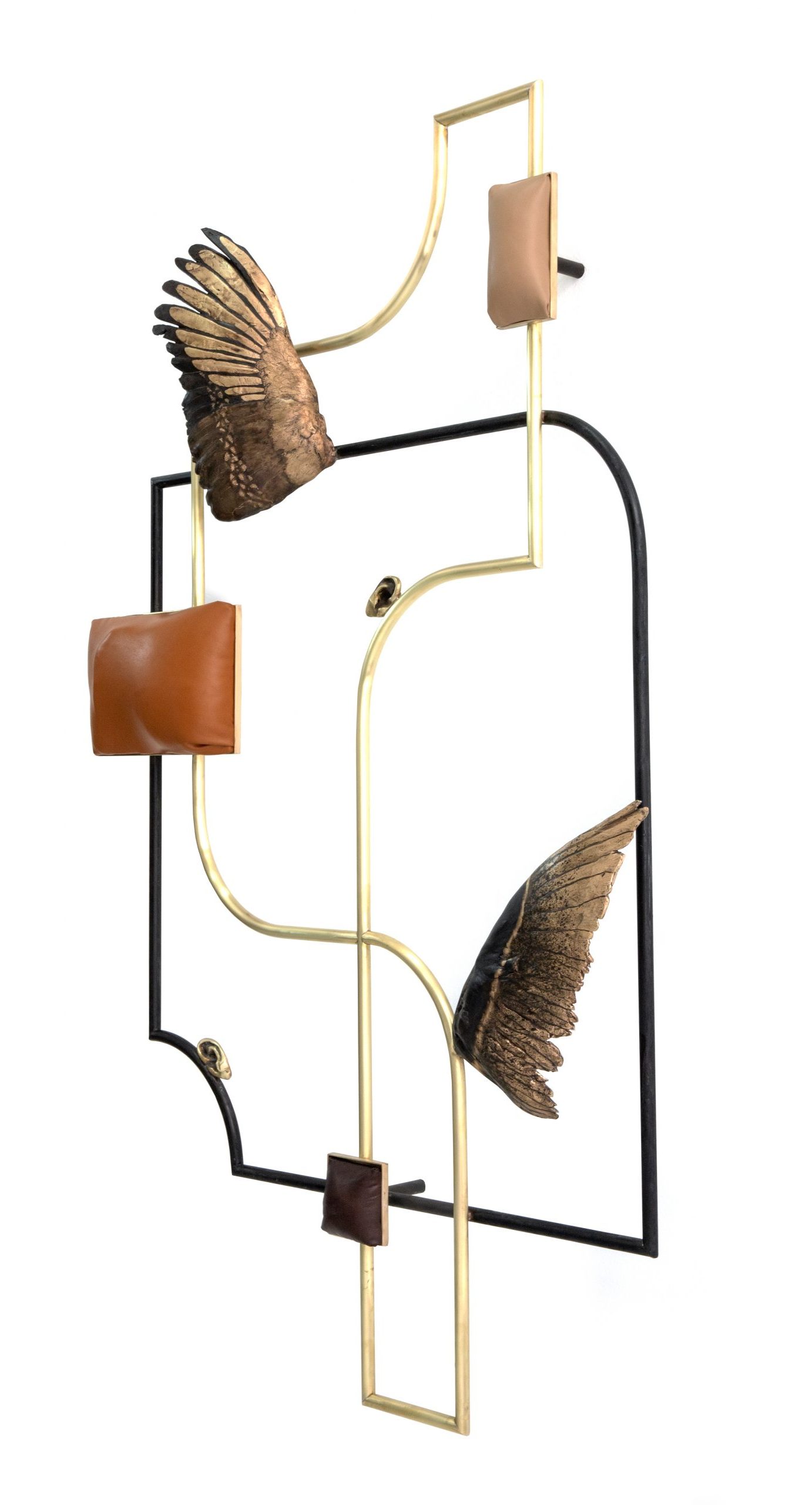
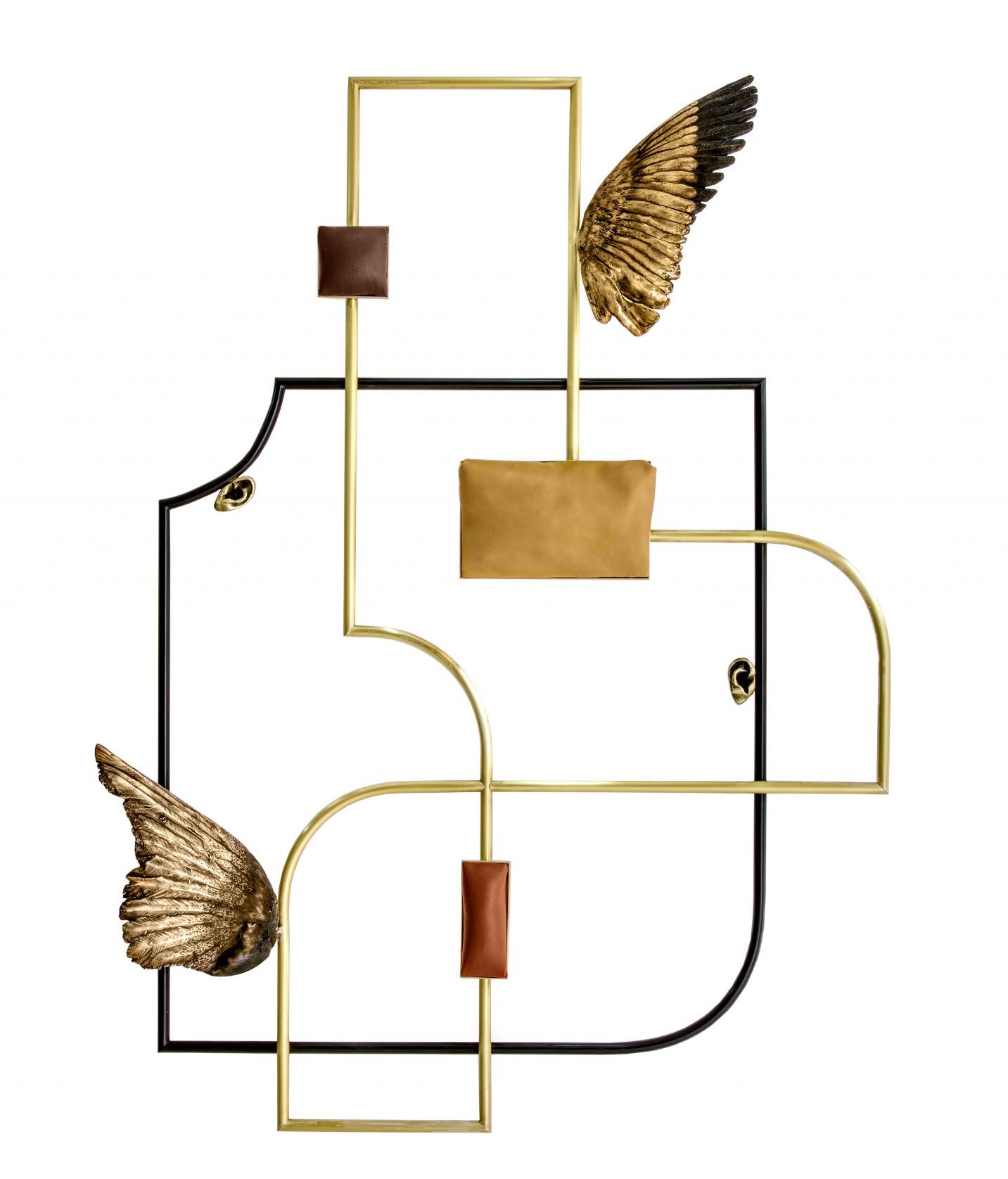
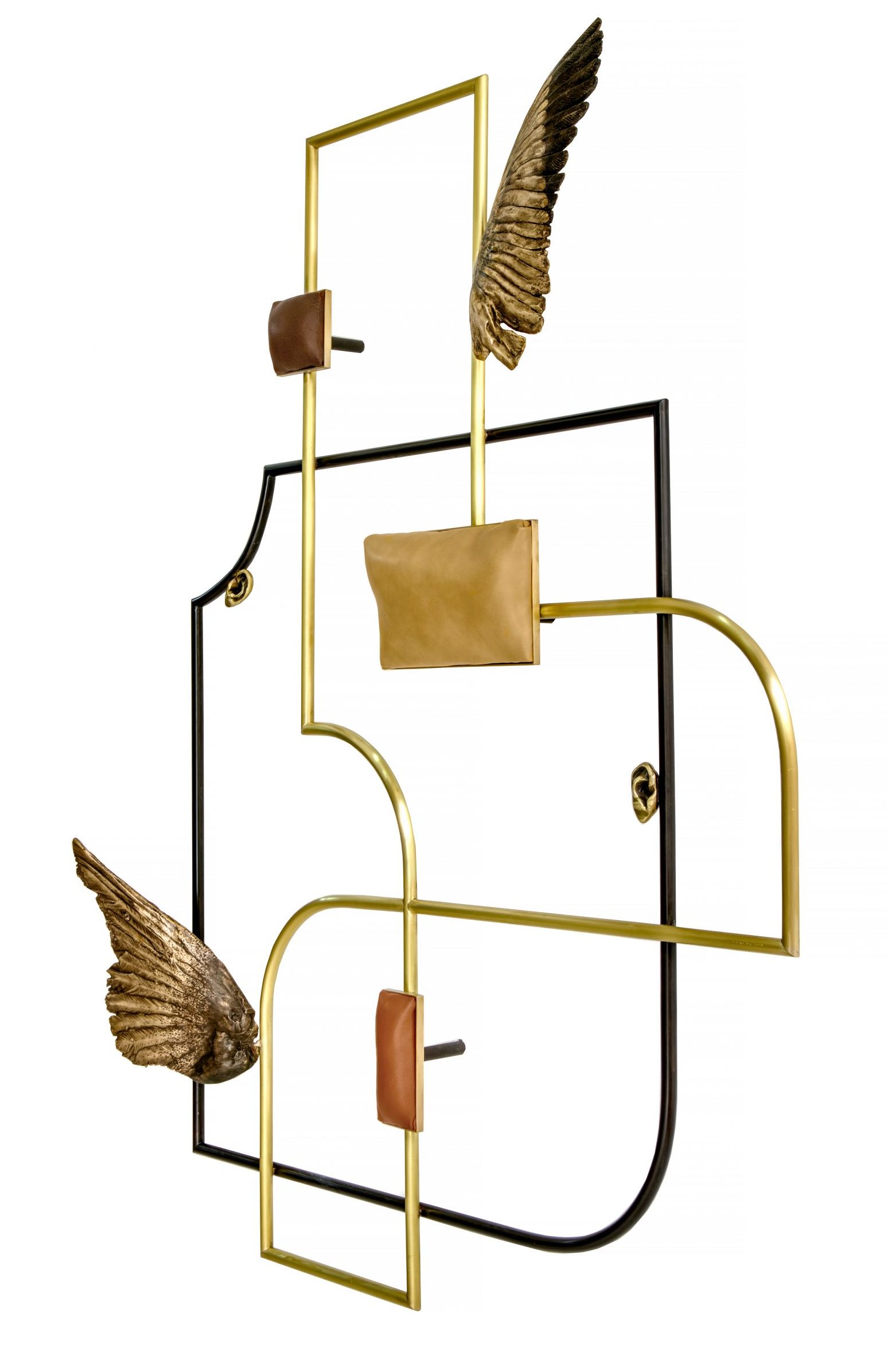
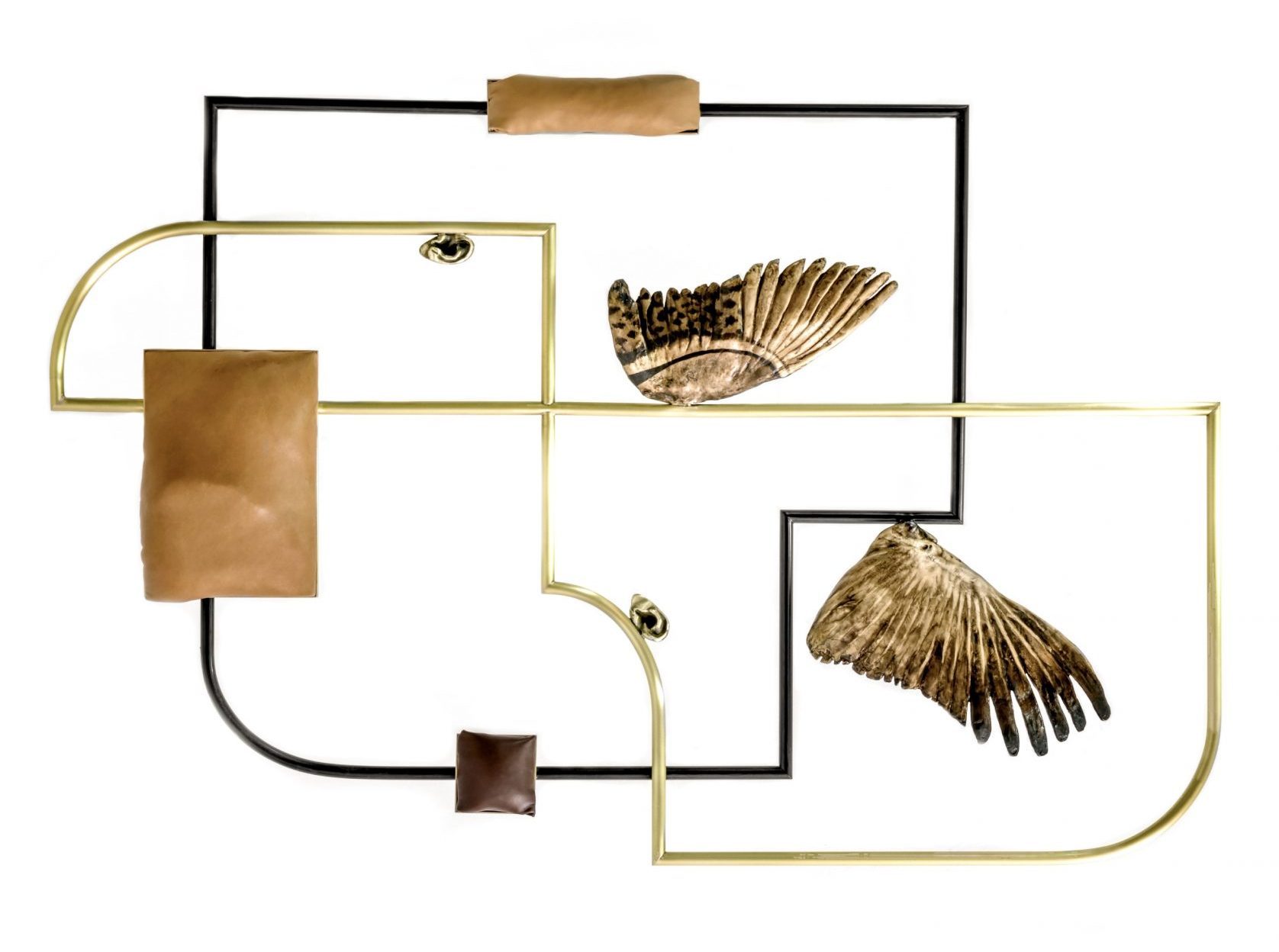
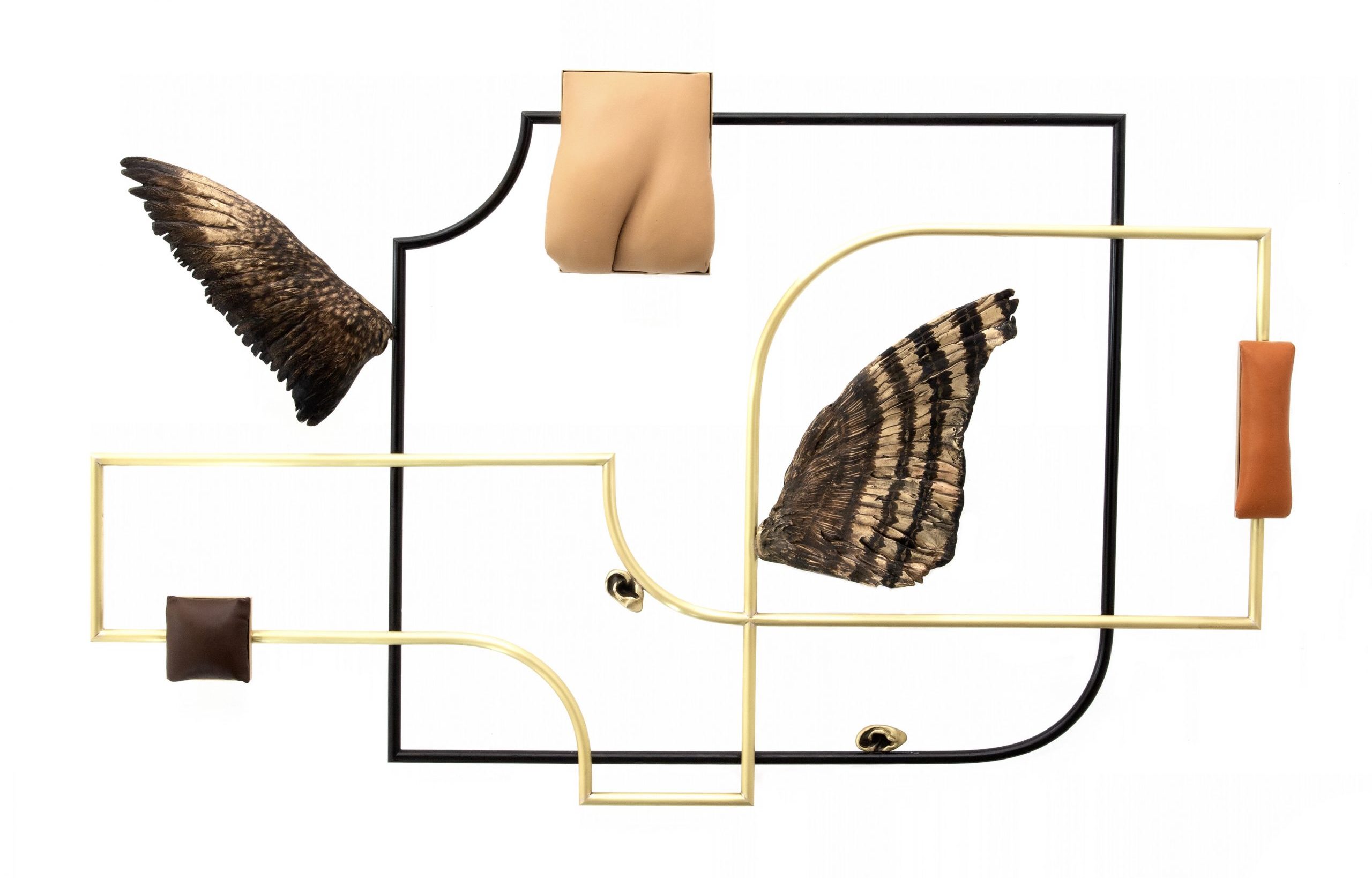
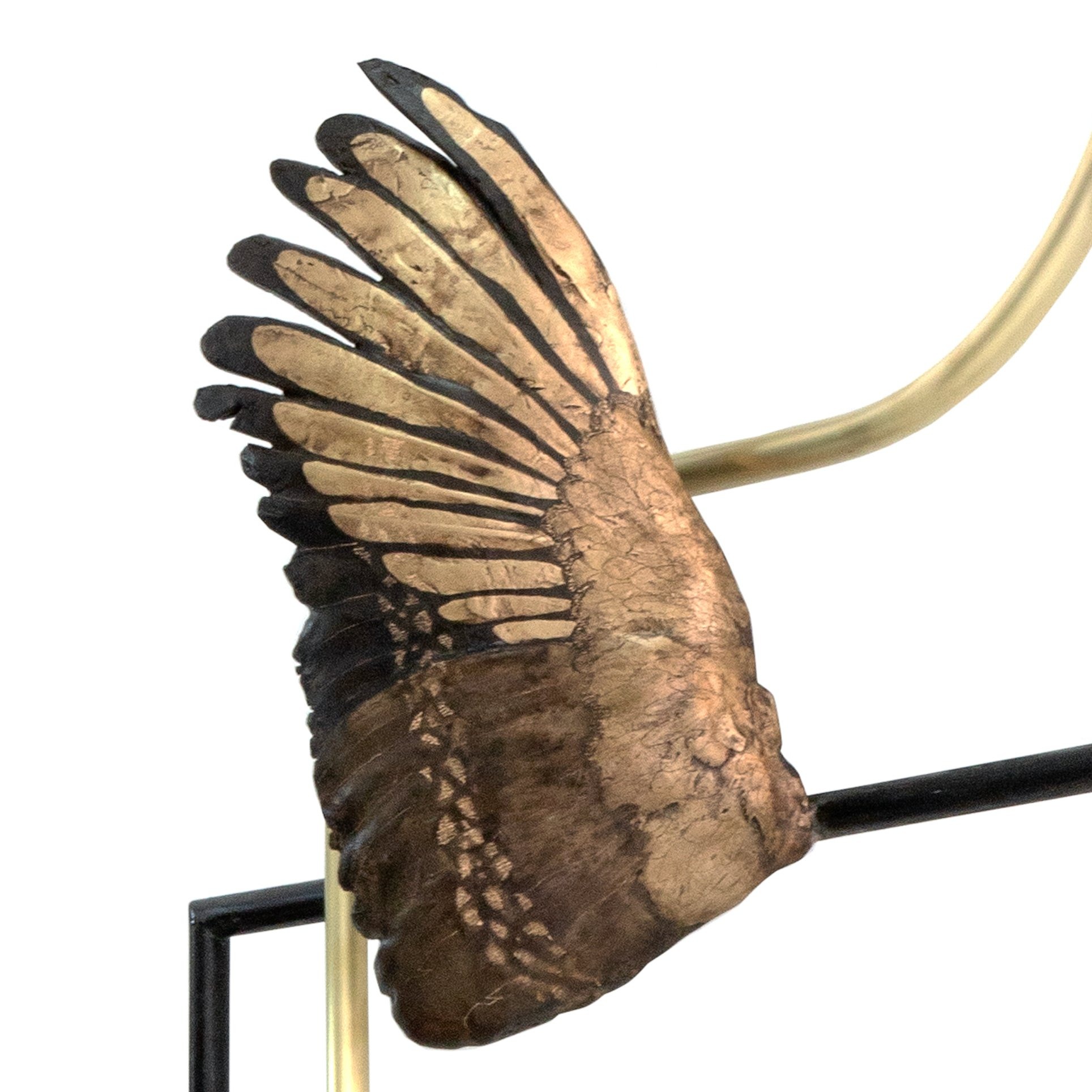
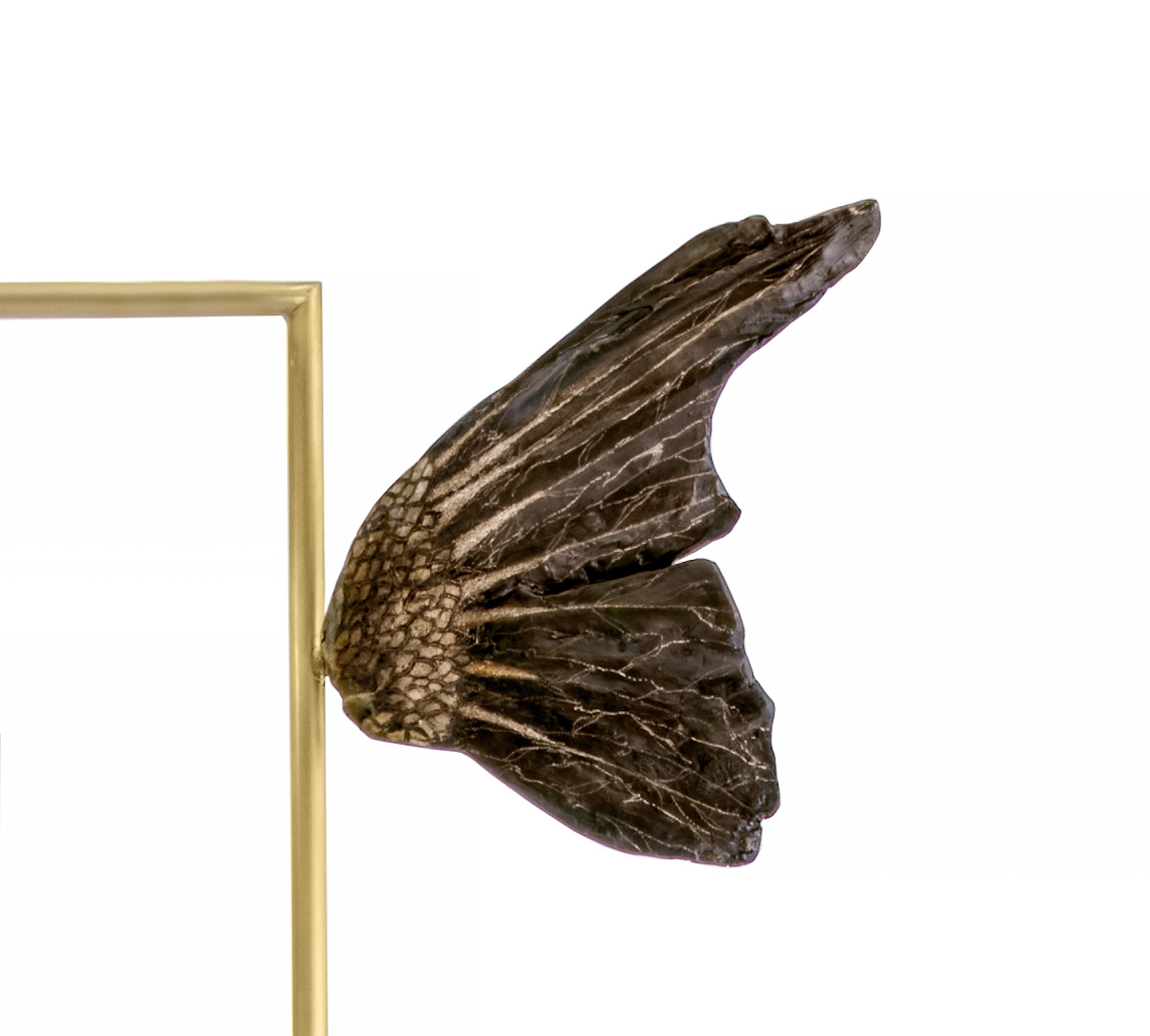
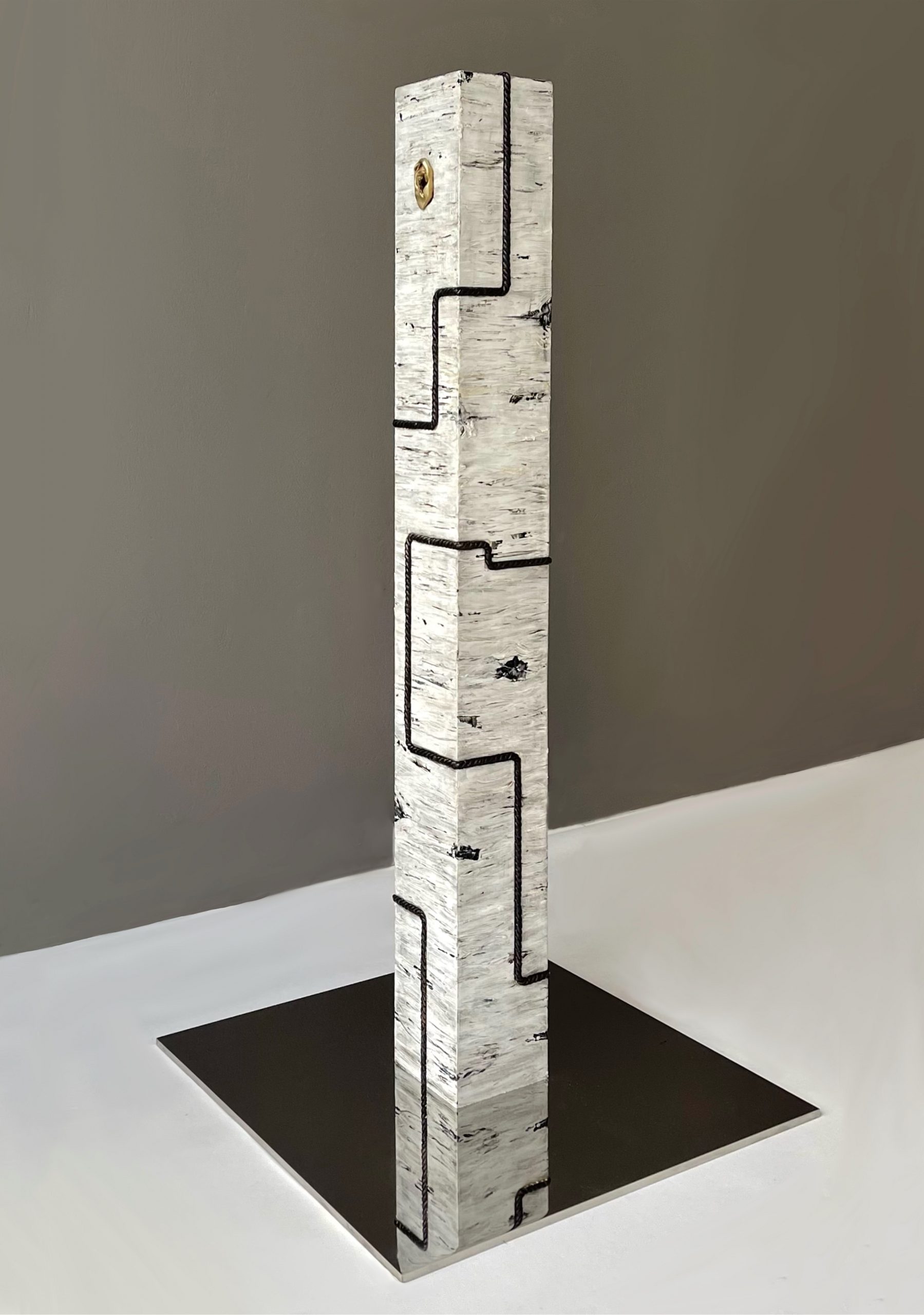
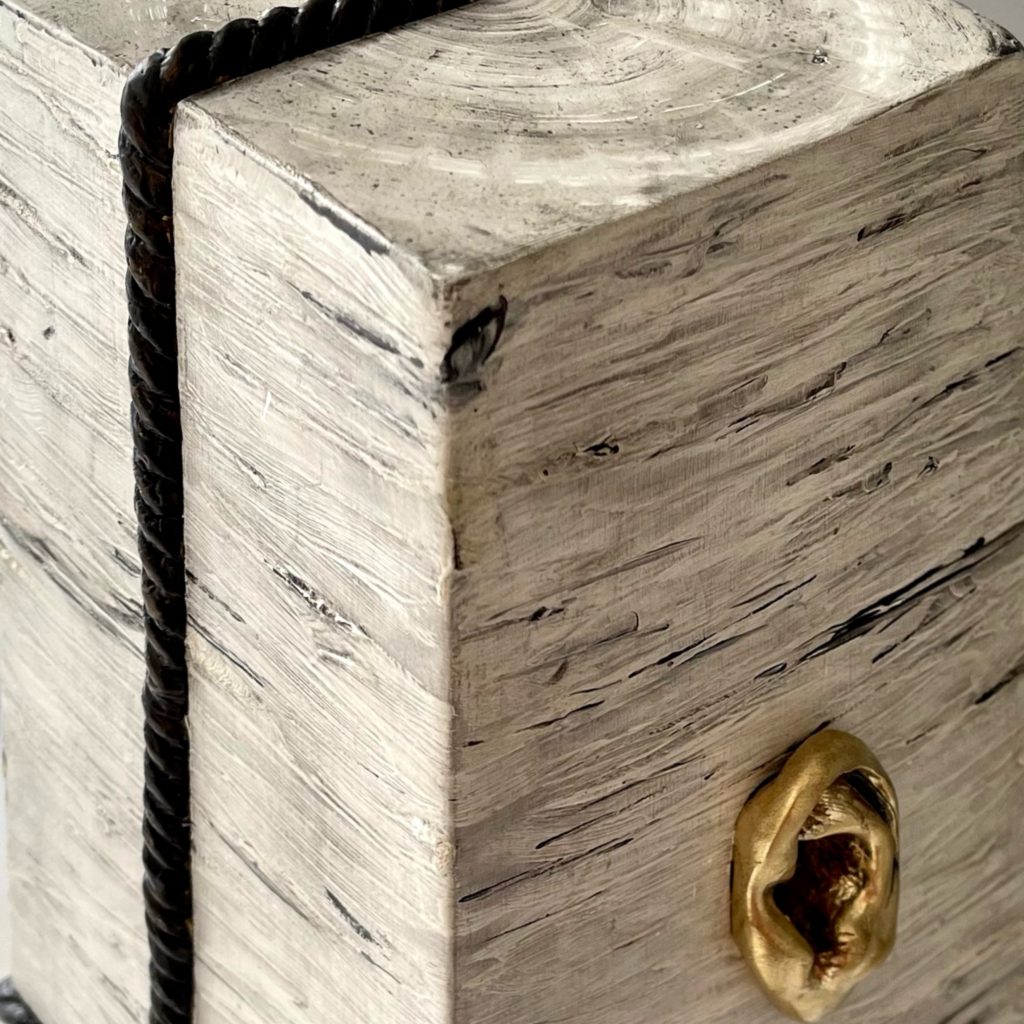
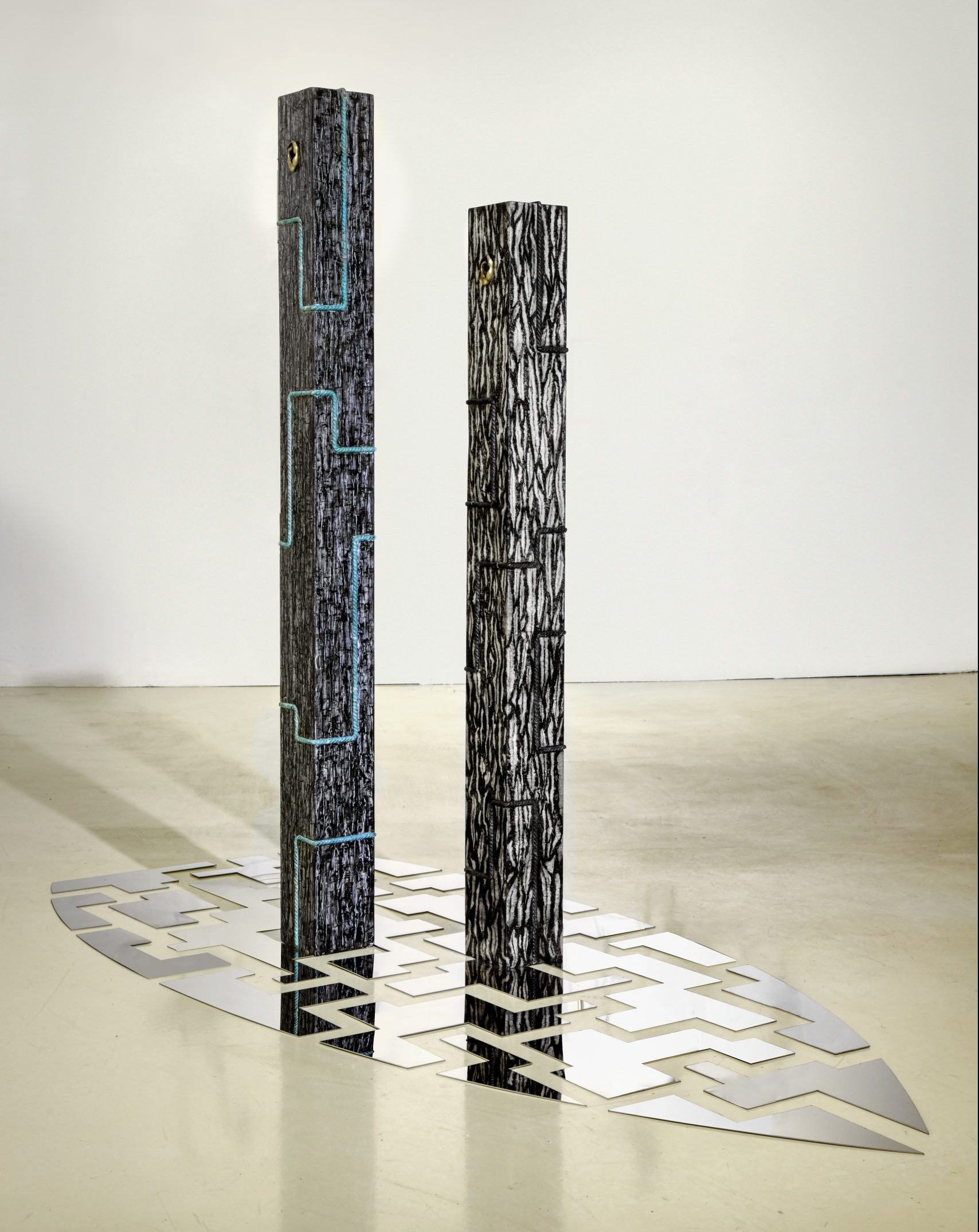
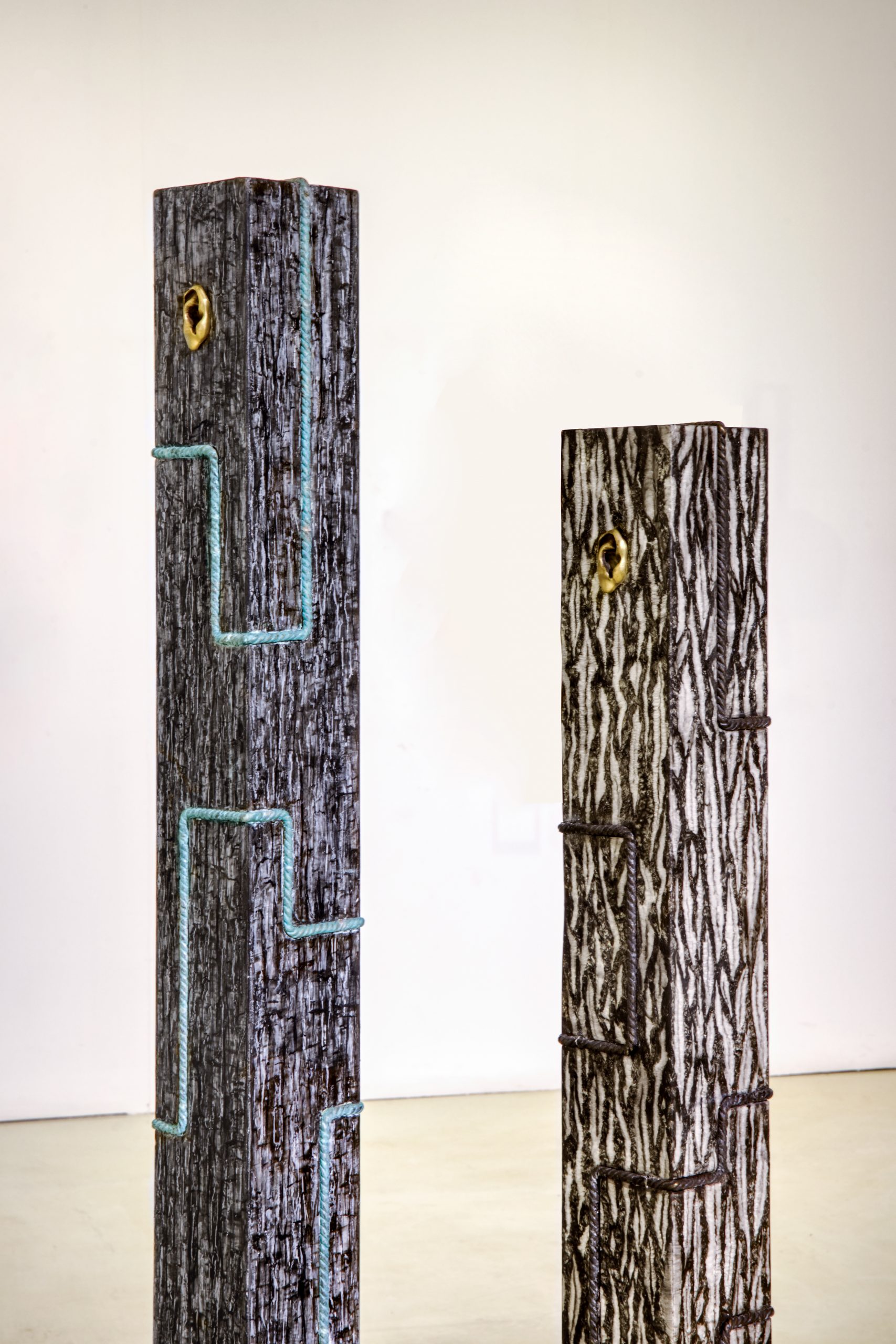
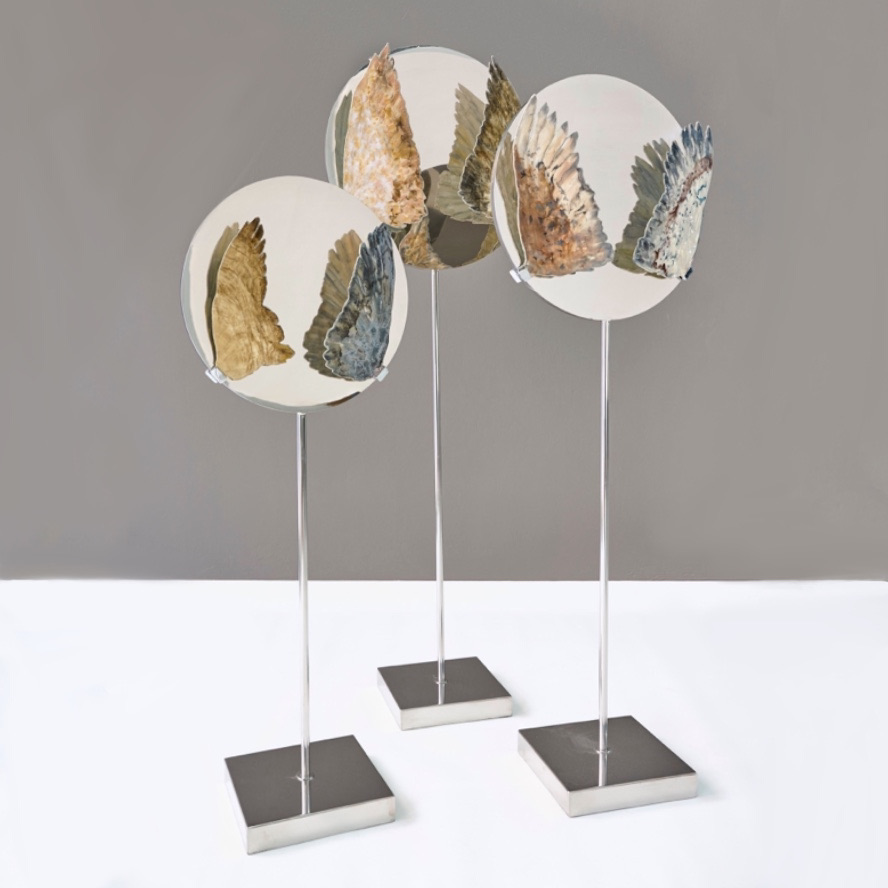
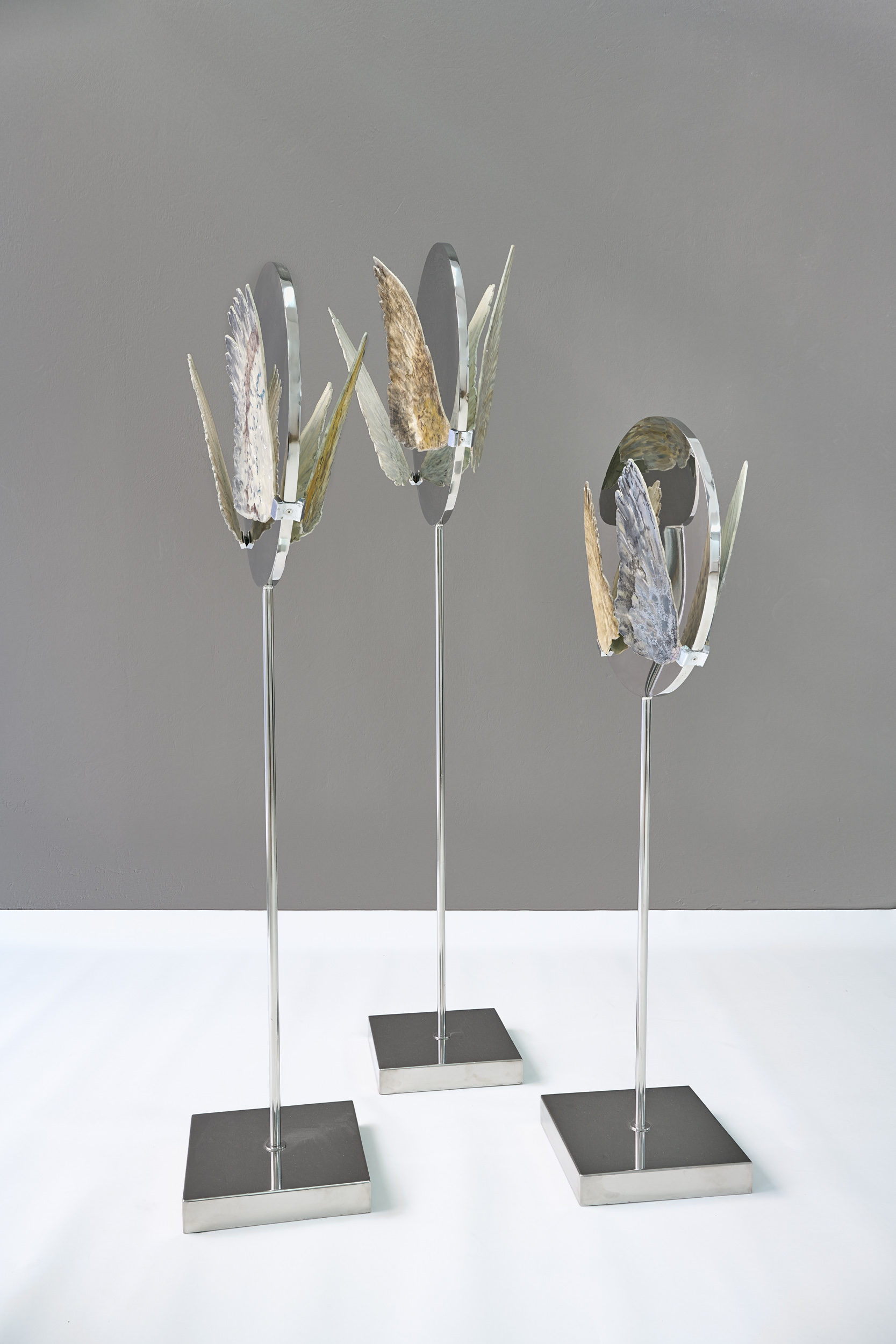
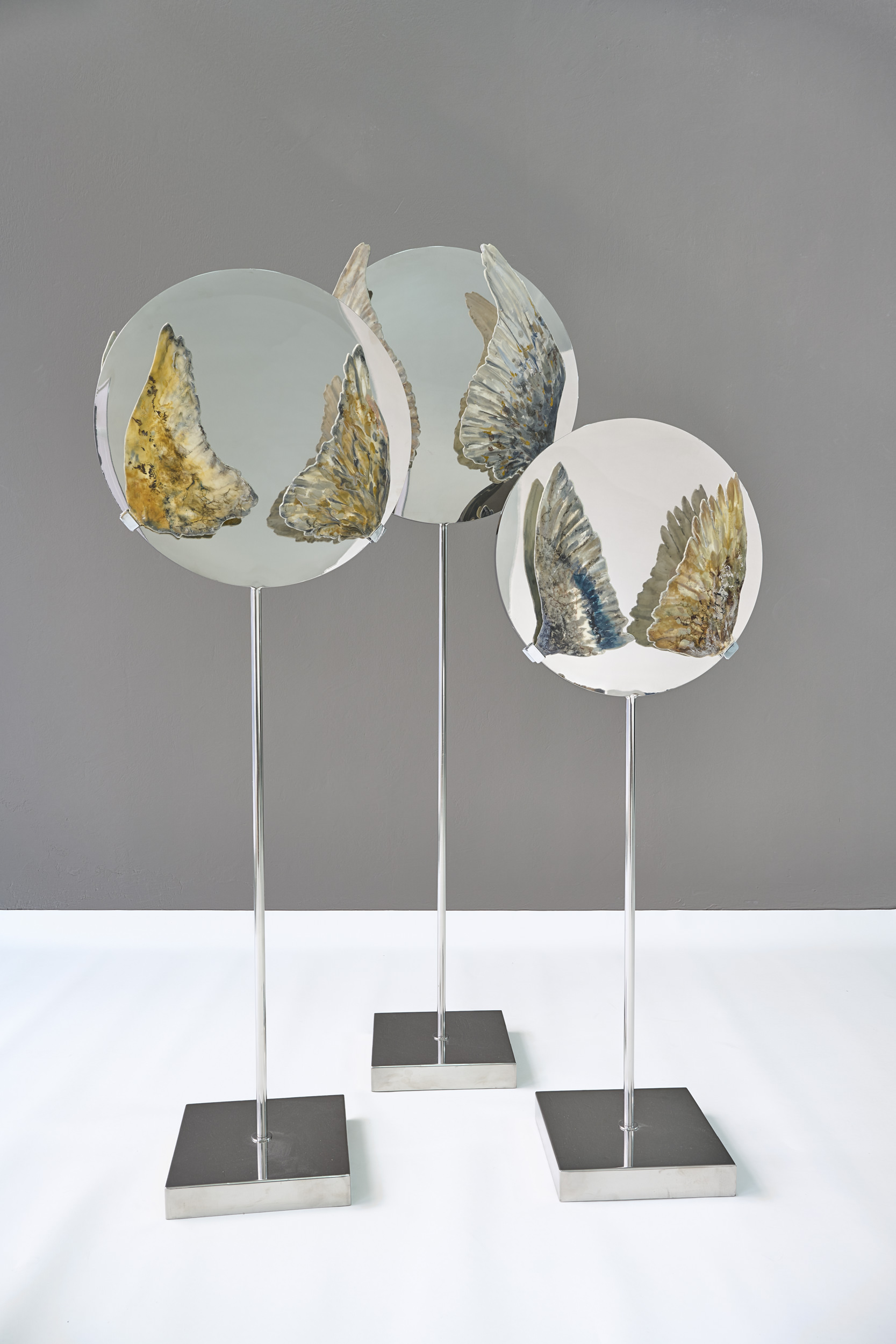
These works, inspired by the mythical bird-like Siren creatures, consist of the following works:
The Siren Topologies - wall sculptures
A sculptural mixed-media painting
Sculptural floor installations
The Siren Thelxis triad of sculptures
"The sculptural forms of Siren Topologies mark the artist's foray into balancing materiality, organic curvature, line, and negative/ positive space. A mathematical topology denotes structures preserved under continuous deformities, such as stretching and warping. The Siren's song, and its ability to psychologically and metaphysically transform those who hear their song, is implicated in this shifting sense of the term topology. The concept also calls to mind the changes which occur in mythological translations generation after generation, language across language, in both literature and the visual arts: while the story may be warped or stretched, the original version remains for the diligent scholar to uncover."
The work, So they spoke, and my heart was fain to listen ..." references art historical precedent in its three-dimensional re-interpretation of Ulysses' encounter with the Sirens as depicted in John William Waterhouse's 1891 painting on this very subject. The physical presence of the ship and the outsize figuration of Ulysses, his crew, and the sirens throughout the composition communicates a visceral, emotionally charged narrative. This sculptural presence translates to Vagioni's vision for how the visitor can navigate the physical exhibition space in direct relation to this mythical encounter, allowing guests to form their own perceptions around spatial relationships and overlapping imagery in the process. The geometric and abstract nature of the installation's formal elements, especially with the inclusion of the mirrored floor pieces, create a means by which the viewer is necessarily confronted with themselves - in the present day - in relation to the enduring Siren myth. When the self is considered as an element within the enduring myth of the Siren as archetype, it necessarily subverts the
the singular notion of the Siren as confined to one specific era or embodiment."
Audra Lambert - Art historian and independent curator
In the Siren Thelxis work (thelxis=enchantment, magic), Vagioni emphasizes the "mirroring" tactic of the Sirens, i.e., once you approach them, they call you by name and promise to give you knowledge about yourself. By using well-polished stainless steel, she creates a symbolic mirror. This way, the viewers' image is reflected as they approach the sculptures.
There is a wing on each side of the sculpture's round surface. Each wing reflection on the stainless steel forms a conceivable bird. These two reflected pairs of wings remind us of the two Sirens in book twelve of the Odyssey and their initial bird-like depiction in antiquity. Furthermore, each sculpture has a double façade. The inspiration for this duality came from a bronze decorative two-faced Siren handle in an ancient Greek water vase (hydria).
Additionally, the circular form of the sculptures is an allegory of the infinite addictive loop in which the Sirens' victims are trapped upon hearing their song. The sculptures are also displayed together as a triad because the number three is spiritually significant. It signifies how the Sirens capture the ternary essence of humans—their mind, body, and spirit.