
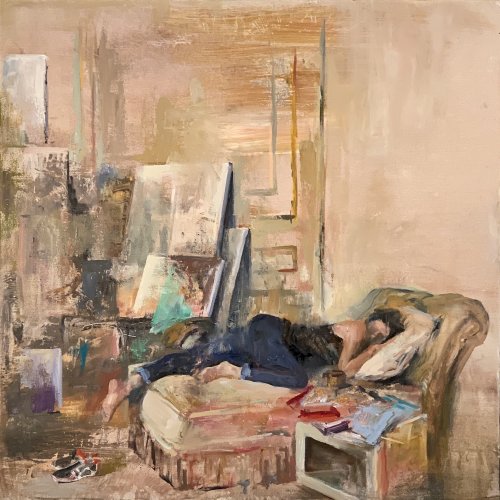
Cocooning, 2014, oil on canvas, 39.4×39.4 inches (100x100cm).
Who doesn’t want to be happy? Everyone claims they want happiness, but most people are not committed to making happiness a priority. Instead, we treat happiness like a random happenstance, an emotional lightning strike. If we are lucky, happiness just happens. But can happiness occur as a result of conscious effort? Can we create the conditions for it to become a reality?
We can.
I once read that happiness is like sweating. You have to work for it to experience it. However, I sensed that happiness, even when it becomes the object of conscious effort, it is more complicated than a physical workup.
A more innovative approach to happiness was expressed in a series of seminars I attended in Athens called “The Art of Happiness”. Although many ideas were introduced, I want to focus on one particular idea that really touched a chord. How we approach art mirrors how we approach happiness. Happiness is not something you gain or lose. It is an Art. You either live in it or abandon it.
Let’s start the inquiry. Among the nine forms of art, which is your favourite?
How you approach your favourite art reveals how you approach your idea of happiness. Do you see yourself as a creator or merely a spectator of the art? If you are the artist who creates the art, you have the will and determination to commit to your happiness. If you are the spectator who enjoys the art—but does not create it–you may be patient and wait for happiness to come to you.
The Age of Covid, with its disruptions, sacrifices, and forced isolation, have made these questions more relevant than ever. Sometimes a period of crisis can lead to a period of unexpected (but welcome) growth and unplanned (but benevolent) life changes. However, if we find isolation has shortened our vision and withered our appreciation for the beauty that surrounds us, maybe we must ask a more challenging question:
Is it a coincidence that the arts were one of the first things removed from our lives?

Add a Comment